


Manchester City back in the Champions League - but not for the right reasons
- Tom White
- Jul 13, 2020
- 7 min read

Photo provided through Forbes website
Manchester City’s UEFA appeal overturn, in theory, is a great result for Man City. But it isn't. They get away with breaking Financial Fair Play rules. And it sets a bad precedent, demonstrating how governing bodies can get bullied by the 'top clubs' with little to no real implications.
(The Premier League is also looking into Man City over Financial Fair Play however that will not be focused on in this article)
On Monday 13th July, Manchester City’s two-year Champions League ban appeal was overruled, on the notion there was too little evidence to prove Manchester City's wrongdoing over financial fair play issues. The FFP's issue was that Man City over exaggerated their revenue from sponsorships so they could appear within the guidelines for FFP compliance. The time period UEFA is investigating is 2012 to 2016.

Photo provided through The Guardian website
This wasn’t the only issue - the other, which should be strongly taken into consideration, was the threatening and non-compliant response Man City took to the investigation. Man City acted like UEFA were personally going after them, stating UEFA were showing “prejudice” for wanting to look further into the allegations found. This approach should never be acceptable and places into question who is in charge - the governing bodies or the clubs? In the same way people get angry when a club is held to ransom by the players, there should be a similar anger when a club outright threatens a leading footballing organisation like UEFA. The inmates are running the asylum.
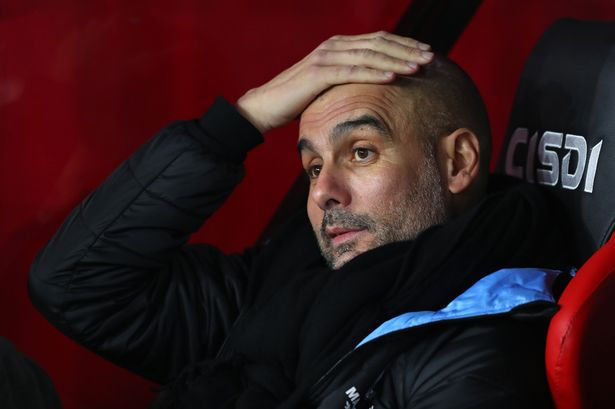
Photo provided through the Manchester Evening News website
Having seen social media today, I was somewhat surprised to see the celebratory nature Man City and their fans took on receiving the news. It seems everyone is missing the underlying point. Man City actively acted aggressive towards an investigation. Their response to this would be something along the lines of ‘the investigation could not find enough evidence to prove any wrongdoing’. First, this isn’t necessarily the case. These allegations were found reportedly from a young Portuguese boy who hacked into Man City’s personal data. Ignoring the worrying fact that a boy was able to hack Man City’s accounts, the evidence he found showed wrongdoing with fudging of the sponsorship numbers. The boy found evidence illegally, and this was a strong case for Man City. Evidence should be found legally. But City were still found with their hands in the cookie jar, and, instead of apologising, they lashed out and refused to cooperate, which, unsurprisingly, further increases suspicion.

Photo provided through the Metro website (photo was posted early on Monday 13th July by Manuel Estiarte who is on Man City's technical staff, the photo has since been deleted)
Pushing UEFA around shines a light on the lack of authority they truly have over clubs. Because clubs are so much more powerful than those who keep them in check and bounds. They have better lawyers than UEFA. They have more fight then UEFA. They can bully UEFA. Even if the evidence was weak at best, Man City’s reaction is telling. Instead of trying to corporate and be honest, they went face to face against them. But why should Man City bend over backwards for UEFA? If that’s a possible question of yours then let me answer by saying: A) It’s an investigation, and Man City should realise that if UEFA is doubting of them, then they must be allowed full access and cooperation while investigating any possible misdoings from the club. And B) They are a top club, which is followed by many fans, including young fans. It’s a football club at heart, not just a business. If players should be role models, then so should the clubs they play for. It is also, as I have mentioned previously, highly sceptical how unwilling Man City were to assist with the investigation in any way, if they had nothing to hide, why did they act like they do have something to hide?

Photo provided through The Independent website
Another area Man City called on against the Champions League ban was that in UEFA’s own FFP guidelines, they state they can’t accuse and punish clubs who committed wrongdoings over five years ago. Two questions rise from there; firstly, how come UEFA were so naïve as to not fully understand their own rules? The time period they were investigating was from 2012 to 2016. Which means UEFA were finding and using evidence from over 8 years ago. Secondly, why are UEFA’s FFP rules so weak and feeble? Clubs should be liable and culpable for major breaches, especially at this level, for many years even after they take place. Let’s take a different example to show how weak this own rule of theirs is: So, the police find out a someone had been embezzling a substantial amount of money from their own firm from the years 2012 to 2016. But because the evidence the police were taking stretched back to 2012, the perpetrator can get away with a slap on the wrists. Would you find that acceptable?

Photo provided through Goal.com's website
Looking into previous examples of FFP bans... Barcelona, Chelsea and Atletico Madrid were held accountable for FFP rules for illegal transfer of foreign players under 18 years of age. The end result meant that Atletico Madrid and Barcelona both got two window transfer bans, and Chelsea ultimately got one. In theory, these are good punishments to give out. The clubs suffer as a result of not being able to buy. But, in reality, those clubs just brought big before the sanctions got imposed. Therefore, little was really lost. In reality, a far more effective consequence would be a Champions League ban. That means a huge loss in revenue given through Champions League. It also makes it far harder to make signings because players want to play on the biggest stage of all, the Champions League. Furthermore, players that the clubs already have won’t want to unfairly miss out on Champions League and could jump ship as a result. So should Chelsea, Barcelona and Atletico Madrid have also got Champions League bans instead? My answer is, if they acted far enough against FFP regulations, then yes.

Photo provided through The Telegraph website (Chelsea were able to sign Kovačić and Pulisic before their transfer ban started)
AC Milan were given a one year ban from the Europa League last year. This was due to overspending. The result meant a substantial financial punishment, however it can’t be compared to a Champions League ban, where the amount of money missed out on is far greater. A Champions League punishment is truly threatening and holds real consequences - fine punishments are virtually useless against big clubs. Man City have been fined a sum of €10 million euros, or roughly £9 millions pounds - this is a reduction on an already mere €30 million euros fine. This is because of their unwillingness to help in the investigation and is effectively a pointless financial hit on such a large club. UEFA issuing Champions League bans would mean even more hostile rejection from the clubs. This is another reason why the FFP rulebook must be clarified to enable UEFA to issue more extreme punishment when appropriate. A punishment that actually can impose some change, to prevent clubs at the top dictating and bending FFP rules.

Photo provided through The Times website
Coming back to the point of how Man City fans and the club have been joyful today with the decision to allow them to play Champions League for the next two seasons: On the surface, this is a totally understandable reaction. But the issue with football fans being so tribal towards their clubs means many times they won’t come to more reasonable assumptions and conclusions. In essence, Man City have local fans ready to defend them even when they are blatantly in the wrong. The fans should not just see UEFA taking Man City out the Champions League because they are vindictive. Instead, maybe realise it's because of the vast amounts of money Man City have, one real way to really hinder them financially as a correct punishment would be to take them out of the Champions League. Two years out the Champions League would mean Man City would miss out on roughly £200 million. It also has to be a threat to other clubs. No club should break FFP rules, and then go against an investigation into them. I don’t blame the fans, but I ask them and all football fans to sometimes take themselves out the picture for a second as a ‘fan’ and truly ask, is my club right?

Photo provided through the BBC website (Photo helps show how some Man City fans reacted to the UEFA Champions League ban appeal)
I am a Chelsea fan, but I can also be critical of them. I am critical of their overpriced memberships and ticket prices. I am critical of our approach towards youth, and the lack of care Chelsea takes with most of their players, merely seeing them as products to sell rather than humans. We were in the wrong when signing foreign under-18 players illegally and our punishment was more than acceptable in the circumstances. I don’t mean we should support other clubs, or that we must only support the ‘right’ club. I will support Chelsea no matter what, but I will never accept all behaviour just because I’m a fan. They should be held accountable for their actions.

Photo provided through the Financial Times website
So, to sum up, does Man City’s lack of punishment show who is in control between the clubs or the footballing organisations? Yes. The clubs. This should not be accepted. UEFA must look at its own rule book, which actually hindered instead of helping them. If Man City won’t take accountability, then others should. The longer UEFA fail to fix and clarify their own rulebook on FFP, and the longer they go without handing out real punishments, the longer big clubs can continue to break and twist FFP rules, and the worse they can get. The lack of punishment for Man City’s demeanour against UEFA’s investigation, enables big clubs to become even more confident and unregulated. The longer this continues, then the longer they can remain at the top, preventing smaller clubs a chance of entering into the 'elite tier' of football.


Comments